A life shaped by place, memory, and momentum
Laura Char Carson lives at the meeting point of several worlds. Barranquilla gave her rhythm, spectacle, and a sense of lineage. Florida gave her reinvention, distance, and domestic calm. Family gave her continuity. Taken together, these influences form a portrait that is more layered than a simple public biography can hold. Laura Char Carson is often described through the people around her, but that misses the deeper truth. She is not only a mother, spouse, or former queen. She is a cultural translator, someone who learned how to carry heritage without turning it into a costume.
Her story begins in a city where public life has volume. Barranquilla is not a quiet backdrop. It is a place where identity is performed in color, music, and movement, where social circles and family names can carry as much weight as any title. Growing up in that environment meant inheriting both elegance and expectation. Laura Char Carson seems to have absorbed that tension early. She would later move through life with a polished stillness, the kind that does not demand attention but naturally holds it.
The making of a modern matriarch
The word matriarch can sound heavy, but in Laura Char Carson’s case it feels precise. She did not build her influence through spectacle. She built it through structure. A home is its own kind of stage, and hers appears to have been one where language, discipline, and affection all had roles to play. Spanish and English lived side by side. Colombian customs traveled with her into American life. Tradition did not stay behind at the border. It came along, folded neatly into daily routines.
That kind of family stewardship is often invisible until one looks closely. It shows up in the way children understand their names, in how they move through the world with confidence, and in how they treat ambition as something natural rather than borrowed. Laura Char Carson appears to have understood this intuitively. She did not merely raise daughters. She helped shape a worldview.
Her household seems to have been built like a well-tuned instrument. Each person had a register, a tone, a tempo. Some families operate like loud brass sections, all volume and competition. Laura Char Carson’s family seems closer to a string ensemble, where individual notes matter because they contribute to a larger harmony. That harmony is one reason her influence continues to surface even when she stays out of the spotlight.
A crown, a city, and a first public role
Being crowned Reina del Carnaval de Barranquilla was more than a ceremonial milestone. It placed Laura Char Carson inside one of the most recognizable cultural traditions in Colombia. Carnival in Barranquilla is not just an event. It is a living pulse, an annual release of music, identity, and collective pride. To represent it requires more than beauty. It requires ease, charisma, and an understanding of public meaning.
That role likely sharpened qualities she would carry later into family life and professional work. Public celebration teaches poise, but it also teaches boundaries. The person in the center of a crowd must know how to remain herself while standing for something larger. Laura Char Carson seems to have mastered that balance. Even later, when her life turned toward privacy and motherhood, the composure of that earlier chapter remained visible.
The crown also matters symbolically. It suggests that Laura Char Carson’s life has never been confined to one script. She has been both emblem and individual, recognized in a public festival and then remade in a quieter domestic landscape. That duality gives her story a certain electric charge. She belongs to visibility, yet she resists being consumed by it.
Home as a creative incubator
One of the most interesting features of Laura Char Carson’s life is how family and creativity appear to overlap. In many homes, artistic ambition is treated as an extracurricular spark. In hers, it seems to have been part of the atmosphere. Music, performance, beauty, and storytelling were not separate from daily life. They were woven into it like threads in a woven shawl, subtle but strong.
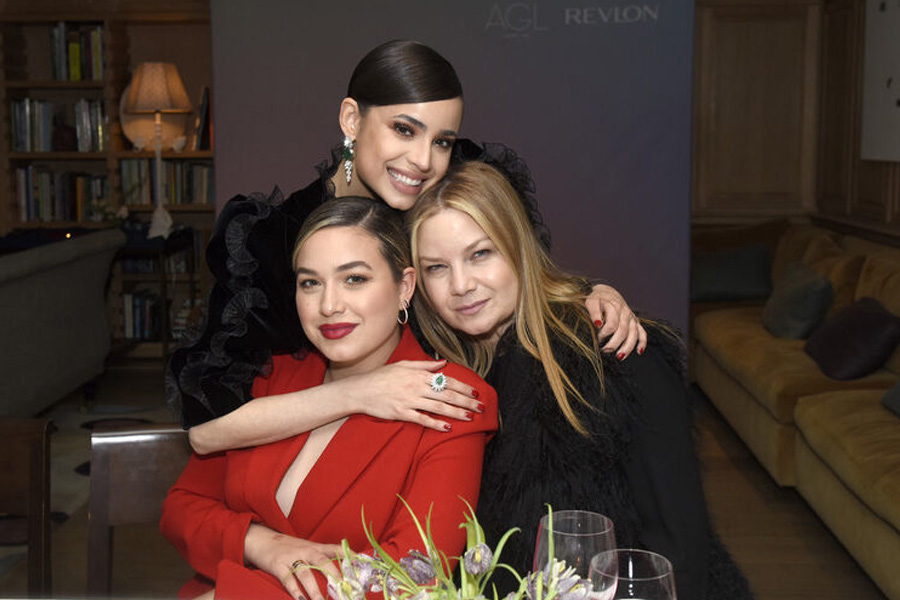
This environment helps explain the contours of her daughters’ careers and personalities. Sofia Carson’s public presence carries polish, discipline, and emotional clarity. Those qualities do not emerge by accident. They are often the result of long years of guidance, example, and expectation. Paulina Char’s interest in beauty and branding suggests another branch of the same family tree, one that values presentation, entrepreneurship, and creative instinct.
Laura Char Carson’s role here is not simply supportive in the narrow sense. She appears to have been formative. A parent can offer rules, or a parent can offer a model. The strongest influence often comes from the second. By living with grace and purpose, she seems to have shown her daughters that identity can be both rooted and adaptable.
From family influence to creative production
Laura Char Carson’s movement into production is significant because it extends the logic of her private life into a professional setting. Production is not the same as performance. It requires judgment, patience, and a willingness to hold the frame steady while others shine within it. That is a fitting role for someone who has long understood how to support a larger story without overshadowing it.
Her involvement in projects such as Purple Hearts and later work tied to The Life List and My Oxford Year suggests a preference for stories that mix emotional access with accessible romance and personal growth. These are not cold, mechanical projects. They are narrative spaces where vulnerability matters. That choice feels revealing. Laura Char Carson seems drawn to work that values feeling without losing shape.
There is an unmistakable pattern in that kind of production taste. It points toward stories that are polished but sincere, commercial but not hollow. Like a house with good bones, the best such projects feel sturdy beneath the surface. They offer comfort, but they also leave room for ache, transformation, and hope. Laura Char Carson’s behind-the-scenes presence fits that atmosphere well.
Heritage as living practice
For Laura Char Carson, heritage is not a museum object. It is a practice. It lives in language, in family gatherings, in memory, in the rhythm of how a home is made. That matters because heritage often gets reduced to labels, especially for families with prominent surnames or public children. But lived inheritance is much more textured than that. It includes manners, humor, food, pride, restraint, and the unspoken rules that shape how people treat one another.
Her Colombian background, Irish ancestry, and family connections create a layered identity, but the most important part is not the inventory of origins. It is the way those origins were carried forward. Laura Char Carson seems to have treated identity as a garden rather than a trophy. It had to be tended. It had to be watered. It had to grow in more than one direction.
That approach gives her life a particular kind of endurance. It is not brittle. It is not dependent on trend or constant visibility. Instead, it is rooted in continuity. The past is not locked away. It is in the room, but it does not dominate the conversation.
Influence measured in echoes
Some people build legacies by standing in the center of the frame. Others build them by shaping the frame itself. Laura Char Carson belongs to the second group. Her influence can be traced in her family’s public presence, in the cultural pride that surrounds them, and in the emotional confidence that seems to radiate from those she has raised. She has moved through life with a blend of discretion and force, like a current beneath calm water.
That kind of presence is easy to overlook and hard to replace. It does not announce itself with fanfare. It gathers strength over time. It shapes decisions, tones, and instincts. It shows up in the way a daughter speaks about her work, in the way a family carries its name, and in the quiet steadiness that holds everything together when the lights dim.
Making Room For Real Life With An Essex Home Extension
Small Gold Holdings With Big Investment Lessons
The Smart Womens Wardrobe That Works Overtime