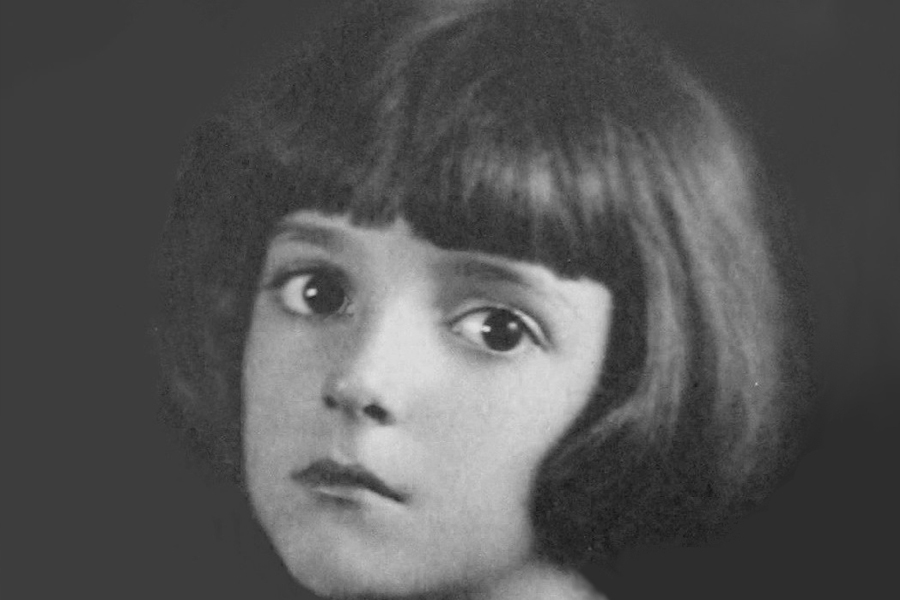
Basic Information
| Field | Details |
|---|---|
| Full name | Izola Martha Mills (often Martha Lizola “Izola” Mills) |
| Born | c. 1837 (often listed as 11 September 1837) |
| Died | 1887 (appears in cemetery and genealogical summaries) |
| Also known as | Martha Lizola Mills; Izola Mills D’Arcy (in some family notes); later Mrs. John H. Stevenson |
| Known for | Appears in genealogies as the mother of actress Ogarita Elizabeth Bellows (aka Ogarita Booth Henderson); later family lore claiming a secret tie to John Wilkes Booth |
| Places associated | Rhode Island–Massachusetts corridor, notably Burrillville and Providence (RI), and Boston (MA) |
| Marriages/partners | Charles Still Bellows (m. 1855; mariner) John H. (John Henry) Stevenson (m. 1871) John Wilkes Booth (claimed partner; no contemporary civil record) |
| Children | Ogarita Elizabeth Bellows (1859–1892) Other children appear in 1860s–1870s records (names in trees include Charles Alonzo and Harry/Henry; details vary by record) |
| Notable descendants | Izola Forrester (granddaughter), an author who popularized the family’s Booth connection narrative |
| Historical status of Booth claim | Disputed; treated as family tradition by most historians rather than established fact |
A Life Glimpsed in Records
Izola Martha Mills sits at the crossroads of genealogy and legend. Her life is sparsely etched in the public record—vital registers, marriage notations, and cemetery entries—yet she casts a long shadow because of the stories told by her descendants. What emerges is a portrait in soft focus: a 19th-century New England woman whose domestic ties and migrations thread through Providence, Burrillville, and Boston, and whose name later became tethered to one of America’s most infamous figures.
The records show a woman born around 1837, maturing into adulthood amid New England’s maritime and mill-town rhythms. Her paper trail is modest, but the story built upon it—especially the claim of a secret marriage to John Wilkes Booth—has proved unusually durable. Like a lantern seen across a fogged harbor, her documented life is clear in places and inscrutable in others.
The Bellows Marriage and the Children
Family and local indexes place Izola’s first marriage to Charles Still Bellows in 1855. Bellows, a mariner, occupies a stable place in the paperwork: he appears where you expect him to, including on the October 1859 birth record of their daughter, Ogarita Elizabeth Bellows. In later life Ogarita would take the stage name Ogarita Booth Henderson and build her identity, in part, around a claim that clashed with that document—asserting Booth, not Bellows, as her biological father.
Genealogists tracking the family find references to additional children. Names such as Charles Alonzo (or Alonzo/Charles A.) and Harry/Henry appear across various trees and municipal records, though the specifics—birth years, survival to adulthood, later residences—can vary by source. That patchwork is typical of 19th-century family reconstruction, where infant mortality, occupational mobility, and inconsistent record-keeping create gaps and overlaps.
The Booth Claim: What the Family Said
Decades after the Civil War, Izola’s descendants—most notably her granddaughter, the writer Izola Forrester—put forward a dramatic claim: that Izola Martha Mills had been the secret wife or partner of John Wilkes Booth and that Booth fathered Ogarita. The narrative came wrapped in family letters, oral history, and a cascade of anecdotes. Ogarita herself leaned into the claim during her theatrical career in the 1870s–1890s, carving out a public persona that yoked her to the fallen actor-assassin’s notoriety.
As stories go, it’s a compelling one—rich with romance, secrecy, and tragic overtones. It placed Izola at the center of a national trauma’s aftershock and offered a tantalizing explanation for Ogarita’s dramatic flair and restless path.
What the Records Say
Where the family lore meets the paper trail, frictions emerge. Ogarita’s birth record names Charles Still Bellows as father. Vital and census materials, as well as maritime service notes for Bellows, align with the practical realities of Izola’s life in the late 1850s and 1860s. No contemporary civil record—marriage license, parish ledger, published notice—has surfaced that documents a legal marriage between Izola and Booth.
Historians who chart Booth’s movements and relationships before April 1865 generally classify the Izola–Booth connection as unproven. The absence of a contemporaneous marriage entry is not definitive disproof, but in historical method it weighs heavily, especially when contradicted by existing vital records for a different spouse.
Later Marriage and Final Years
After the tumult of the 1860s, Izola appears in Massachusetts records with a second marriage: to John H. (or John Henry) Stevenson in 1871. This union is more crisply documented in local civil registries and indexes. Her last years were spent in the same Rhode Island–Massachusetts orbit, and by the time of her death in 1887, her daughter Ogarita was on the road, performing on stages and—at times—promoting the Booth lineage claim that would keep the family in the historical footnotes long after Izola’s burial.
Modern Re-examinations and DNA
The 20th and 21st centuries brought new eyes to the story. Local historians teased apart family anecdotes, checking them against municipal ledgers and court files. Some assertions withered under scrutiny; others remained possible but unproven. In the era of genetic genealogy, limited DNA comparisons have been reported in public forums and documentary programs, with at least some tests failing to support a biological link between Mills-line descendants and known Booth-line descendants. Such tests are constrained by which branches are sampled and by the availability of definitive Booth-line comparators, but the balance of modern inquiry has tended to tilt away from the family’s boldest claims.
Timeline at a Glance
| Year | Event |
|---|---|
| c. 1837 | Birth of Izola Martha (Martha Lizola) Mills, likely in New England |
| 1855 | Marriage to mariner Charles Still Bellows recorded in regional indexes |
| Oct 1859 | Birth of Ogarita Elizabeth Bellows; Bellows listed as father on the record |
| 1865 | Assassination of Abraham Lincoln; death of John Wilkes Booth (April 26) |
| 1871 | Marriage to John H. (Henry) Stevenson recorded in Massachusetts |
| 1887 | Death of Izola Martha Mills; later memorialized in cemetery records |
| 1892 | Death of Ogarita (by now known as Ogarita Booth Henderson), ending the family’s first public chapter of the Booth story |
| 20th–21st c. | Renewed research and periodic DNA inquiries evaluate the Booth paternity claim with mixed—often negative—results |
A Family Tree Snapshot (Condensed)
| Generation | Name | Notes |
|---|---|---|
| 1 | Izola Martha (Martha Lizola) Mills (c. 1837–1887) | Central figure; married Charles Still Bellows; later married John H. Stevenson |
| 2 | Ogarita Elizabeth Bellows (1859–1892) | Actress; publicly claimed Booth as biological father; used the name Ogarita Booth Henderson |
| 3 | Izola Forrester (dates 19th–20th c.) | Author-granddaughter; amplified the Booth connection in print |
| 2 | Other children (names vary: e.g., Charles Alonzo, Harry/Henry) | Appear in genealogies and local records; some died young or left faint trails |
How the Story Endures
Izola’s endurance in public imagination stems from the voltage of the Booth connection and the bright flare of Ogarita’s career. The story has everything: a famous villain, a hidden romance, contested identities, and the lure of documentation just out of reach. Yet the scaffolding that historians prefer—contemporary records and reproducible evidence—leans toward a more prosaic truth: a New England woman whose first husband was a mariner named Bellows, whose daughter reinvented herself onstage, and whose family later reimagined the past in a way that captivated audiences for generations.
In that tension between ledger and legend lies the real fascination. Izola’s life is a palimpsest—ink from the 1850s and 1860s faint but legible, overwritten by later hands with a dramatic script that may never be fully erased. The historian’s task is to read both layers, patiently, and to admit what is known, what is plausible, and what remains in the margins.
FAQ
Was Izola Martha Mills married to John Wilkes Booth?
No contemporary marriage record confirms a legal union, and most historians treat the claim as unproven family lore.
Who was named as the father on Ogarita’s birth record?
Charles Still Bellows is listed as the father on Ogarita’s 1859 birth record.
Did DNA testing resolve the Booth paternity question?
Limited publicized comparisons have not supported a Booth connection in at least some tested lines, though sampling has been narrow.
Where did Izola primarily live?
Her life centers on Rhode Island and Massachusetts, with ties to Providence, Burrillville, and Boston.
Whom did Izola marry after Bellows?
She married John H. (or John Henry) Stevenson in 1871, a union that appears in civil registries.
When did Izola Martha Mills die?
She is recorded as having died in 1887.
Why is Izola connected to the stage world?
Her daughter, Ogarita Elizabeth Bellows—later known as Ogarita Booth Henderson—was a working actress in the late 19th century.
How do historians view the Booth connection overall?
As an intriguing family narrative lacking the independent, contemporaneous documentation required for acceptance as fact.