Takeaways
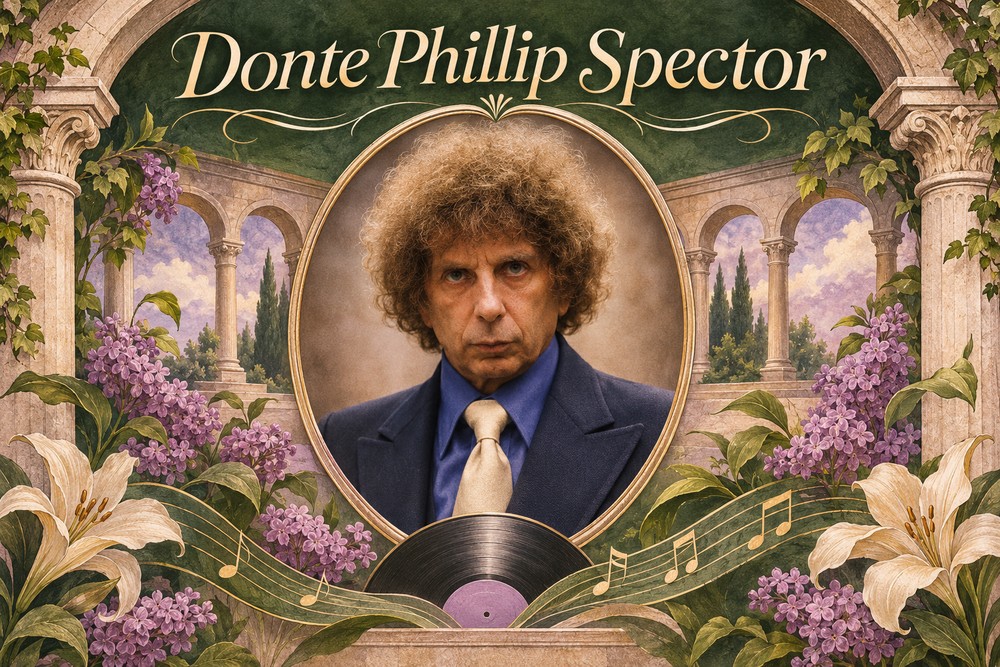
Donte Phillip Spector’s public profile is sparse, especially beside the outsized fame of his parents. The biography of Donte Phillip Spector identifies him as one of the sons adopted by producer Phil Spector and singer Ronnie Spector. It places his birth around 1969 and describes a family that included brothers Louis and Gary. These details come from public accounts and should be handled with care. Donte has largely kept a private life, and a thin record is not permission to fill in the gaps with guesses about work, relationships, or personal views.
His parents occupied very different positions in popular music. Phil Spector became known for densely layered recordings he called the Wall of Sound, producing songs for groups and performers across the 1960s. Ronnie Spector was the lead singer of the Ronettes, whose recordings became enduring examples of girl-group pop. PBS NewsHour’s obituary of Phil Spector offers a grounded account of Phil’s career and legacy. That history explains the public interest in the family, but does not define Donte’s own identity.
Phil and Ronnie married in 1968. Their marriage ended in divorce in 1974, a period that has been recounted through Ronnie’s memoir and interviews as well as wider media coverage. Descriptions of the household can be disturbing and emotionally charged. Any account of Donte should distinguish his parents’ statements and established reporting from claims that cannot be independently checked. It should not speculate about what a young child understood or remember from events occurring in the home.
The source says Donte and his brother Gary later spoke publicly about their father, particularly when Phil’s legal troubles attracted intense attention. Family members’ interviews can be important testimony, but they are still perspectives from people with particular experiences. A balanced account attributes statements to the speaker and avoids treating a short interview as a complete record of a family’s life. It also avoids republishing unnecessarily graphic details when they do not help explain Donte’s own biography.
Phil Spector was convicted in 2009 of the murder of actor Lana Clarkson and died in prison in 2021. The conviction and its consequences are part of the family’s public history, but Donte was not responsible for his father’s actions. Children and relatives of people convicted of crimes can be unfairly treated as extensions of the accused person. Ethical writing keeps culpability with the individual and recognizes the separate lives of family members.
There is little reliable public information about Donte’s education, occupation, or current life. Online pages sometimes attach career claims or net-worth estimates to people who have no public professional profile. Such numbers are often unsupported and should not be repeated as facts. In Donte’s case, the absence of a public-facing career is a meaningful limit on what can be stated, not an invitation to manufacture a storyline about what he does.
The broader Spector family story includes adoption, divorce, later family changes, and the burdens that can accompany fame. Each element should be included only when it helps explain Donte’s public context. Information about siblings and other relatives deserves restraint as well, particularly if those people have chosen not to live publicly. A reader can understand the outline without being given every personal detail that circulates online.
A careful portrait of Donte Phillip Spector is consequently defined as much by what remains unknown as by the few established connections. He is the son of two consequential musicians and part of a complicated family history, but he is also an individual who has not placed his private life before the public. NPR can establish the musical legacy surrounding his parents; the biographical page offers a family outline. Neither justifies claiming more than the record supports.